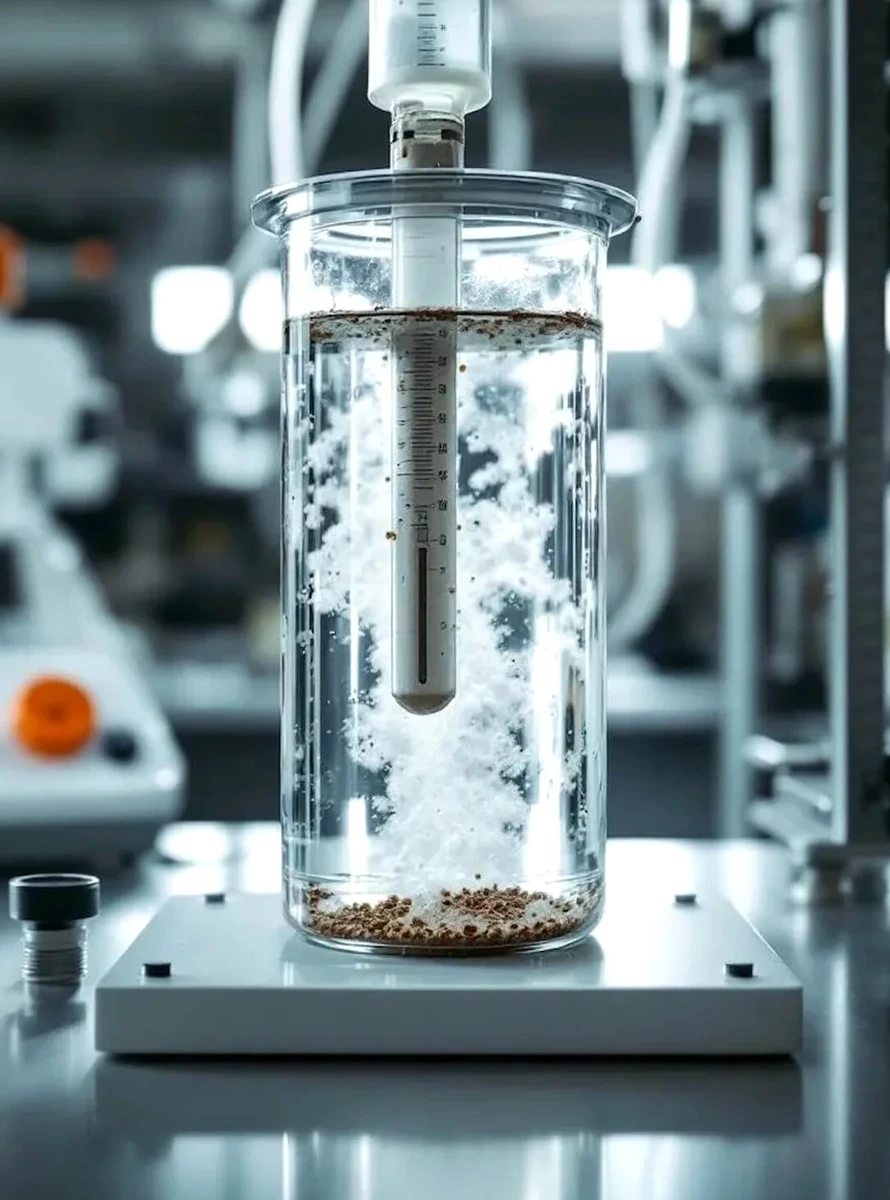
The glacial and alluvial deposits underlying Coquitlam create a mixed profile where clean gravels abut silt-rich lenses within the same site. Accurate particle size distribution is the first step in predicting how these formations will handle water, freeze-thaw cycles, and structural load. The lab runs complete grain size analysis combining mechanical sieving for coarse fractions with hydrometer sedimentation for fines, delivering a continuous curve from 75 mm down to the clay fraction. For foundation projects in the Westwood Plateau or along the Pitt River, this test determines whether the native material meets filter criteria or requires engineered fill replacement. The procedure follows ASTM D6913 and D7928 protocols, ensuring that classification outputs align with the Unified Soil Classification System (USCS) and AASHTO M 145 requirements used by the Ministry of Transportation and Infrastructure.
A single hydrometer reading at the 2 µm cutoff can reclassify a ‘clean sand’ into a liquefiable silty sand, changing the entire seismic design basis.
Local considerations
With an average annual precipitation exceeding 2,000 mm across Coquitlam’s slopes, poorly graded soils with insufficient fines can develop internal erosion pathways that destabilize embankments and retaining structures. A grain size analysis that stops at sieve No. 200 misses the clay fraction responsible for cohesion — a parameter that separates a stable cut from a progressive failure during prolonged rainfall. For sites near the Coquitlam River, where groundwater fluctuates seasonally, the D15-to-D85 filter ratio calculated from the gradation curve becomes the engineering control that prevents piping beneath retaining walls and riprap revetments. The lab report includes the full particle-size distribution plot, Cu and Cc values, and USCS group symbol so that the geotechnical engineer can assess internal stability without interpolation or assumption.
Quick answers
What is the typical turnaround time for a combined sieve and hydrometer analysis?
Standard reporting is five to seven business days from sample receipt. The hydrometer phase requires a 24-hour sedimentation series, and the lab runs temperature-controlled baths to stabilize readings. For time-sensitive projects such as tender-stage investigations, a 48-hour expedited service is available with prior arrangement.
How much does a complete grain size analysis cost in Coquitlam?
Which test method do you use for the hydrometer fraction — ASTM or AASHTO?
The primary reference is ASTM D7928-21 using a Type 152H hydrometer calibrated at 20 °C. When a project is governed by Ministry of Transportation specifications, the lab can also report per AASHTO T 88, which follows a similar sedimentation principle but differs slightly in sample preparation and reading intervals.
Do I need to provide an undisturbed sample for grain size analysis?
No — particle size distribution is a disturbed-sample test. A representative bulk sample of 500 g for sandy soils or 200 g for fine-grained material is sufficient. The lab can accept bagged samples from split-spoon retrievals, test pit excavations, or auger cuttings, provided they are sealed to retain moisture for the wash-loss determination.