← Home · Roadway

Flexible Pavement Design in Coquitlam: Asphalt Performance on Glacial Soils

Together, we solve the challenges of tomorrow.

LEARN MORE →

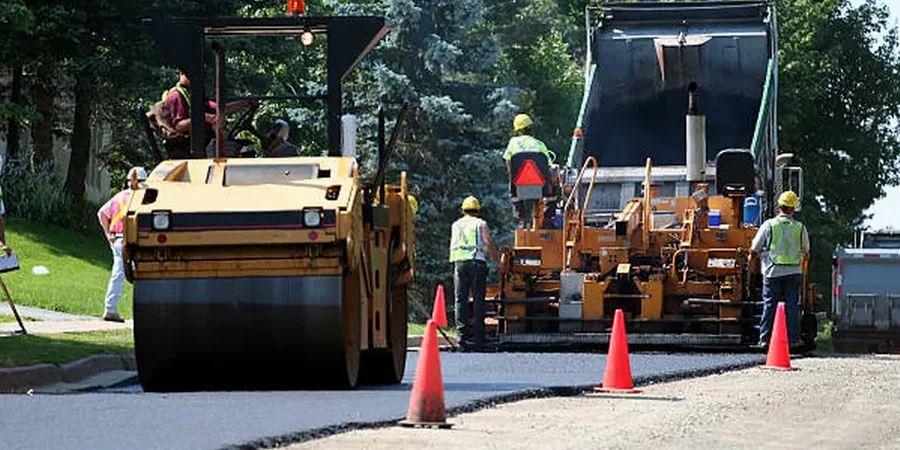
A vibratory roller is only as effective as the pavement section it compacts. In Coquitlam, where the subgrade shifts from dense glacial till to pockets of soft silt within a few hundred meters, specifying the right asphalt concrete thickness and granular base means reading what the soil will do under repeated axle loads. Our team starts with CBR road testing to quantify the bearing capacity of the native formation, then layers that data into a structural number calculation that matches the traffic index for the project. We have designed flexible pavements for bus loops along Pinetree Way, industrial yards in the Fraser Mills area, and residential streets climbing the slopes of Westwood Plateau, each with a distinct layer configuration and drainage detail.

A flexible pavement in Coquitlam lives or dies by the drainage detail under the granular base, not by the asphalt thickness alone.
Methodology and scope

Last year we reviewed a parking lot off Lansdowne Drive that had rutted badly after two winters. The section was built over a lens of Coquitlam River silts that had never been properly identified. We pulled a dynamic cone penetrometer out of the truck and drove it at six locations before lunch. The variable refusal depths told the whole story. Our flexible pavement design now incorporates a subgrade stabilization layer where the CBR drops below 4 percent, tying into in-situ permeability tests so the base course does not saturate during the November-to-March rain cycle that dumps over 1,800 mm on the city annually. Key characteristics of the sections we produce:
Flexible Pavement Design in Coquitlam: Asphalt Performance on Glacial Soils
Technical reference image — Coquitlam

Local considerations

Coquitlam sits at 24 m elevation near the river but climbs past 200 m on the plateau in less than two kilometres. Those gradients accelerate surface runoff during the 180 rainy days the city averages each year. When a flexible pavement section is designed without accounting for the perched groundwater that builds up behind the escarpment in spring, the base course becomes a reservoir and the asphalt cracks from the bottom up. We have also mapped ice lens formation in silty subgrades during cold snaps where nighttime temperatures drop below -5°C for a week. The frost heave lifts the pavement unevenly, and the thaw leaves a weakened layer that pumps fines up through the aggregate. Our sections always include a separation geotextile at the subgrade-base interface and a frost taper calculated from local freezing index data, because skipping either one guarantees a failed pavement before the first maintenance cycle.

Need a geotechnical assessment?

Reply within 24h.

Email: contact@geotechnicalengineering.vip

Technical data

ParameterTypical value
Design traffic (ESALs)10^5 to 10^7 depending on facility type
Target structural number (SN)2.5 – 5.0 for local roads and parking areas
Asphalt binder gradePG 58-28 per BC MoTI specification
Minimum subgrade CBR≥ 6% after compaction; stabilization required below 4%
Granular base thickness150–300 mm of 25 mm minus crushed aggregate
Sub-base thickness200–450 mm depending on frost depth and subgrade type
Compaction standard98% modified Proctor (ASTM D1557) for base layers

Associated technical services

01

Subgrade Evaluation and CBR Determination

Field and laboratory CBR testing following ASTM D1883, combined with dynamic cone penetrometer profiles to map weak zones before the first aggregate is placed.

02

Structural Section Design

Layer thickness and material specification using the AASHTO 1993 method, adapted for Coquitlam traffic loads, frost conditions, and local aggregate availability.

03

Construction QA/QC Testing

Nuclear density gauge and sand cone testing on each lift, plus FWD spot checks to confirm the in-situ modulus matches the design assumptions.

Applicable standards

ASTM D1883-21 – CBR of laboratory-compacted soils, ASTM D1557-12e1 – Modified Proctor compaction, BC MoTI Standard Specification for Highway Construction (latest revision)

Quick answers

How much does a flexible pavement design cost for a project in Coquitlam?
Which asphalt binder grade do you specify for Coquitlam's climate?

We specify PG 58-28 for most flexible pavement projects in Coquitlam. The high-temperature grade of 58°C handles summer heat on exposed parking lots, while the low-temperature grade of -28°C provides crack resistance during cold snaps. On steep grades or bus lanes we move to a polymer-modified PG 58-34 for added rutting resistance.

What subgrade problems do you see most often in Coquitlam?

Soft silts and organic lenses along old Coquitlam River channels are the most common issue we encounter. These soils can have a CBR as low as 2 or 3 percent, which simply cannot support a standard pavement section. We identify them with DCP soundings and stabilize the zone with additional granular thickness or cement treatment before the base course goes down.

How do you handle drainage in flexible pavement design here?

Coquitlam's rainfall demands positive drainage at every layer boundary. We design the subgrade with a minimum 2 percent crossfall, include a daylighted granular sub-base where topography allows, and add perforated edge drains wrapped in filter fabric when the water table is within a metre of the formation. The goal is to keep the base course below 60 percent saturation year-round.

Location and service area

We serve projects across Coquitlam and surrounding areas.

View larger map