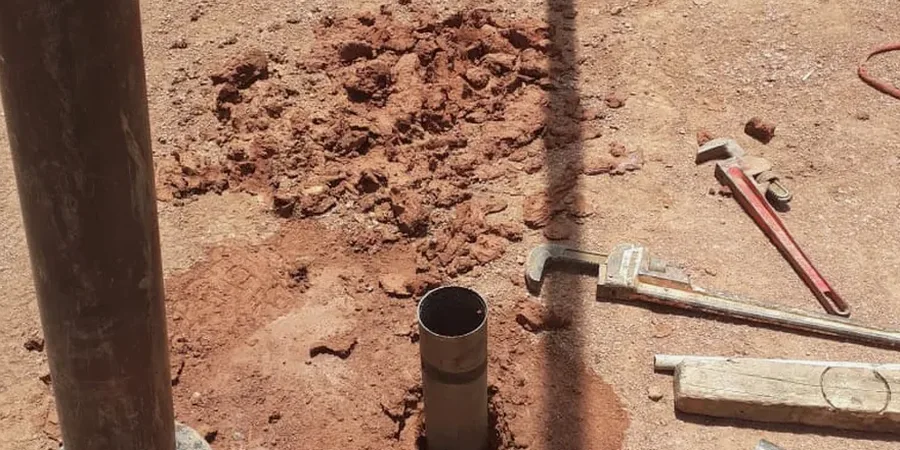
The glacial till and advance outwash deposits across Coquitlam create one of the most unpredictable hydrogeological profiles in Metro Vancouver. Groundwater flows through sandy interbeds perched above dense lodgement till, making desk-based permeability assumptions risky at best. We run field permeability tests—both Lefranc and Lugeon—to measure hydraulic conductivity in situ, where it counts. The Coquitlam River basin and the Pitt River escarpment both show rapid lateral changes in permeability that borehole logs alone cannot resolve. For dam core evaluations near the Coquitlam Lake reservoir or deep excavation planning along Lougheed Highway, we combine packer testing with in-situ permeability protocols aligned with ASTM D4630. A single Lugeon test in fractured granodiorite on Burke Mountain often reveals orders of magnitude more flow than lab tests on intact core predict. That difference drives design.
A single Lugeon test in fractured Coquitlam bedrock tells you more about groundwater control than a hundred lab permeameter tests on intact core.
Local considerations
We see a recurring pattern in Coquitlam: groundwater levels stabilize during the dry summer months, and the pre-construction permeability investigation gets deferred until August. Then the October rains hit, pore pressures spike in the upper sand and gravel units, and the assumed steady-state dewatering rates are suddenly inadequate. A Lefranc test run in September at low groundwater cannot replicate the hydraulic gradient that governs flow in November. We insist on running falling-head tests at multiple depths through the screened interval and, where bedrock is involved, Lugeon testing with at least two pressure cycles to detect hydraulic fracturing or fracture dilation. Coquitlam’s till-over-bedrock interface is a notorious flow path—ignoring it leads to heave in excavations and grout loss during cutoff wall construction. The cost of a proper field permeability program is trivial compared to a dewatering system that fails halfway through bulk excavation.
Quick answers
When is a Lugeon test required instead of a Lefranc test in Coquitlam?
Lugeon testing applies to fractured bedrock, which is common on Burke Mountain, Eagle Ridge, and the northern Coquitlam slopes. If the borehole encounters competent or weathered rock with open joints, a Lugeon test with a pneumatic packer gives you hydraulic conductivity of the fracture network. Lefranc testing is for overburden—till, sand, silt, gravel—and uses a screened interval in the borehole. In a single Coquitlam borehole that passes from glacial till into granodiorite, we often run Lefranc in the upper 15 metres and Lugeon below the bedrock contact.
What affects the accuracy of a field permeability test the most?
Borehole preparation and test zone isolation. In Coquitlam’s mixed soils, smearing of the borehole wall during drilling can reduce measured permeability by an order of magnitude. We use careful drilling practices and, for Lefranc tests, ensure the sand pack and bentonite seal are placed correctly. For Lugeon tests, packer seating in competent rock above and below the test interval is essential—leakage past the packer invalidates the pressure stage. We verify packer seal with pressure hold tests before each run.
How much does a field permeability test program cost in Coquitlam?
Can field permeability data replace lab permeability tests on soil samples?
Field tests measure the bulk mass permeability including fractures, fissures, and macro-structure that lab tests on small intact samples miss entirely. In Coquitlam’s glacial till, lab permeameter tests on Shelby tube samples give matrix conductivity only—field Lefranc tests capture the effect of sand lenses and fissures that control real drainage behaviour. For fractured rock, there is no meaningful lab alternative to the Lugeon test. We use lab tests for material characterization and field tests for design parameters.