← Home · Underground Excavations

Geotechnical analysis for soft soil tunnels in Coquitlam

Together, we solve the challenges of tomorrow.

LEARN MORE →

Coquitlam's geology presents a direct challenge for subsurface work. Glacial till, marine silts, and sand lenses alternate across the city, and the water table often sits within 2 meters of surface in the lower reaches near the Fraser River. Tunneling through these materials without a precise geotechnical campaign is a gamble. We focus on soft ground tunnel analysis to define the deformation envelope before the TBM or sequential excavation method even enters the alignment. The work integrates lab shear strength data from triaxial tests with in-situ pore pressure readings to model face stability under both drained and undrained conditions.

A soft ground tunnel in Coquitlam succeeds or fails on the reliability of the pore pressure profile and the undrained shear strength assigned to the face.

Methodology and scope

CSA A23.3 and the NBCC structural commentaries set the framework for underground concrete design in Canada, but they don't replace a site-specific ground model. In Coquitlam, that model must account for the compressible Sumas Drift clays and the overconsolidated Vashon till. We characterize the soil profile using CPT soundings to capture small-scale layering that standard SPT intervals miss. The tip resistance and sleeve friction logs are then correlated with Atterberg limits and consolidation data to build a numerical model in PLAXIS 2D. Face pressure, lining loads, and surface settlement troughs are predicted iteratively. The grouting program, when required, is designed from the permeability values measured in borehole packer tests along the tunnel horizon.
Geotechnical analysis for soft soil tunnels in Coquitlam
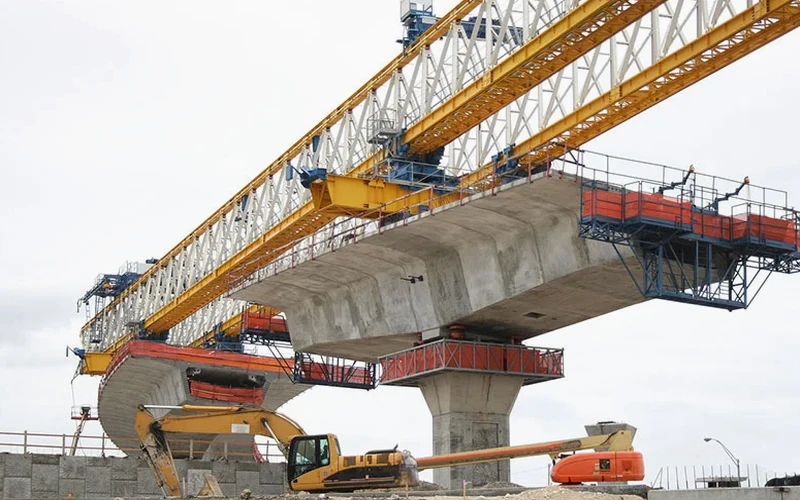
Technical reference image — Coquitlam

Local considerations

The primary monitoring instrument for soft ground tunneling in Coquitlam is the vibrating wire piezometer, grouted into the borehole at target depths before excavation begins. These sensors record pore pressure changes in real time as the face advances. A sudden drop in pressure can signal a hydraulic connection to a sand lens, while a spike may indicate undrained loading ahead of the cutterhead. We couple these readings with surface settlement points and in-tunnel convergence arrays. The data feeds back into the observational method: if the measured settlement exceeds 60% of the predicted value, the face pressure or grout injection rate is adjusted immediately. In the loose alluvial deposits found near the Coquitlam River, the risk of a blowout or uncontrolled settlement is highest, and the instrumentation layout is denser.
Need a geotechnical assessment?

Reply within 24h.

Email: contact@geotechnicalengineering.vip

Explanatory video

Technical data

ParameterTypical value
Undrained shear strength (Su)15–60 kPa in marine silts
Overconsolidation ratio (OCR)1.5–4.0 in Vashon till
Permeability (k)10⁻⁶ to 10⁻⁸ m/s in silty clay
At-rest earth pressure coefficient (K₀)0.5–0.7 for normally consolidated soils
Modulus of elasticity (E₅₀_ref)3–15 MPa from triaxial CD tests
Face support pressure range0.8–2.2 bar in EPB mode

Associated technical services

01

Tunnel face stability analysis

We calculate the limit equilibrium pressure for the tunnel face using Broms & Bennermark's stability ratio adapted to Coquitlam's glacial stratigraphy. The output defines the minimum support pressure for EPB or slurry shields.

02

Settlement prediction and monitoring plan

Gaussian trough parameters are calibrated from 2D finite element models that replicate the stratigraphic columns found in the Coquitlam area. We then specify the instrumentation array and trigger levels for the observational method.

Applicable standards

ASTM D4767 – Consolidated Undrained Triaxial Test, CSA A23.3 – Design of Concrete Structures, NBCC 2020 – Structural Commentaries for Underground Works

Quick answers

What soil parameters are critical for a soft ground tunnel in Coquitlam?

Undrained shear strength and the overconsolidation ratio are the two parameters that control the face stability calculation. In Coquitlam's glacial and marine deposits, we also need the coefficient of permeability to design the face conditioning and the grouting strategy.

How much does a geotechnical analysis for a soft soil tunnel cost in Coquitlam?
What is the typical depth of a soft ground tunnel in this area?

In Coquitlam, shallow utility and transit tunnels are often driven at depths between 8 and 25 meters. The depth is chosen to stay within the glacial till where possible, avoiding the looser alluvial deposits near the surface.

How do you account for seismic loads in the tunnel lining design?

We apply the free-field deformation method per the NBCC structural commentaries. The shear strain profile is computed from the site-specific shear wave velocity, and the ovaling deformation is imposed on the lining model to check the flexural capacity of the segments.

Location and service area

We serve projects across Coquitlam and surrounding areas.

View larger map