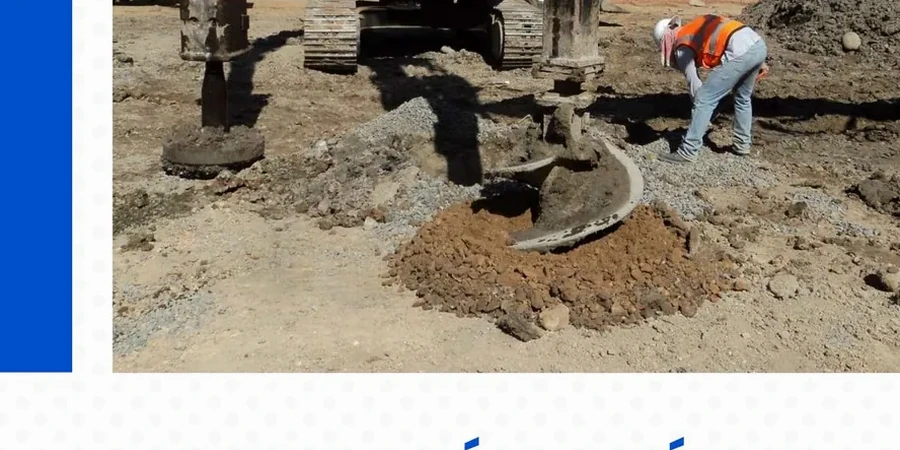
The vibroflot is a modular unit: a 130 kW hydraulic power pack driving a cylindrical vibrator 12 to 16 inches in diameter. In Coquitlam, we rig it on a crawler crane and feed crushed stone from a front-end loader running alongside the column grid. The probe advances by water jetting and dead weight, then lifts in meter increments to form a compacted stone column from the bearing stratum up. When the Fraser River floodplain transitions into glacial till near the Coquitlam River, the granular fill delivered to site must meet a clean, angular specification with less than 5 percent passing the #200 sieve. Our lab checks gradation on every third truckload. For sites where the soft clay exceeds 15 feet, we often combine the column layout with a pre-excavation SPT campaign to confirm refusal depth before mobilizing the vibro rig.
A stone column grid designed without a load transfer platform loses 40 percent of its settlement-reduction efficiency in Coquitlam’s layered silts.
Methodology and scope
On Austin Avenue and the lower slopes of Westwood Plateau, we encounter a mix of loose silty sand and organic clay lenses. A stone column design here has to solve two problems at once: settlement control and drainage. The columns act as vertical drains during staged loading, accelerating consolidation from months to weeks. We specify a column diameter of 0.9 m and a triangular grid at 2.0 m spacing as a starting point, then adjust after reviewing the CPT tip resistance and friction ratio profiles. Bearing capacity verification uses the Priebe method modified for the unit weight of the native Coquitlam silt, which averages 16.5 kN/m³ at 3 m depth. The load transfer platform above the columns is a compacted granular blanket 0.6 m thick, reinforced with biaxial geogrid. This detail prevents differential settlement between columns, a failure mode we have observed in older commercial buildings on Barnet Highway where the platform was omitted.
Local considerations
The mistake we see repeated is specifying stone columns in organic silt without a preload surcharge. Organic layers in Coquitlam’s lowlands can lose 8 to 12 percent of their thickness under load, and a column grid alone cannot arrest this long-term creep. The column bulges into the soft matrix, the platform sags, and floor slabs crack within three years. Another costly shortcut is skipping the post-installation modulus test. We run plate load tests on 2 percent of columns, selected randomly, and correlate results with CPT soundings taken mid-grid. Without this step, the owner has no proof that the design area replacement ratio was actually achieved. On a 2019 warehouse project near United Boulevard, post-testing revealed a 15 percent shortfall in column stiffness, corrected immediately with a second pass of the vibroflot.