Together, we solve the challenges of tomorrow.
LEARN MORE →Geotechnical investigation in Coquitlam represents the critical first step in understanding the ground beneath any proposed development. This category encompasses a comprehensive suite of subsurface exploration techniques, laboratory testing, and engineering analyses designed to characterize soil, rock, and groundwater conditions. In a city framed by the Coast Mountains and dissected by the Coquitlam and Fraser Rivers, these investigations are not merely a regulatory checkbox—they are an essential safeguard against slope instability, liquefaction, and settlement that can compromise both public safety and project viability.
Coquitlam's geology presents a particularly challenging environment for construction. Much of the city lies on glacial till, advance outwash, and glaciomarine sediments deposited during the last glaciation, overlying Tertiary bedrock of the Burrard Formation. The transition zones between the upland areas of Westwood Plateau and the low-lying floodplains near the Fraser River feature complex soil profiles with lenses of soft clay, peat, and loose sands. These conditions demand rigorous site-specific investigation to identify potential hazards such as compressible organic soils in the Colony Farm area or the steeply sloping terrain along the Como Creek ravines where erosion and debris flow risks must be carefully evaluated.
In Canada, geotechnical investigations must conform to the National Building Code of Canada (NBC) as adopted by the Province of British Columbia, along with the BC Building Code requirements. The Engineers and Geoscientists BC (EGBC) Professional Practice Guidelines mandate that investigations be supervised by qualified professionals and follow standardized procedures. For critical in-situ testing, methods such as the CPT (Cone Penetration Test) are routinely employed to provide continuous profiles of soil behaviour type and strength parameters, particularly valuable in the soft soil deposits common in Coquitlam's lower elevations. These standards ensure that foundation designs account for the seismic hazard level characteristic of the Metro Vancouver region, including the potential for lateral spreading and ground motion amplification.
The types of projects requiring thorough geotechnical investigation in Coquitlam span the full spectrum of development. Single-family residential construction on sloping lots demands slope stability assessments and drainage recommendations. Multi-storey mixed-use buildings in the Burquitlam and Coquitlam Town Centre areas require deep foundation designs such as driven piles or drilled shafts, informed by detailed stratigraphic profiling. Municipal infrastructure projects, including the expansion of the SkyTrain Evergreen Extension corridor, rely on extensive subsurface data to mitigate excavation risks and ensure long-term performance. Even smaller-scale retaining walls or stormwater infiltration systems trigger the need for targeted investigation to verify soil bearing capacity and permeability characteristics.
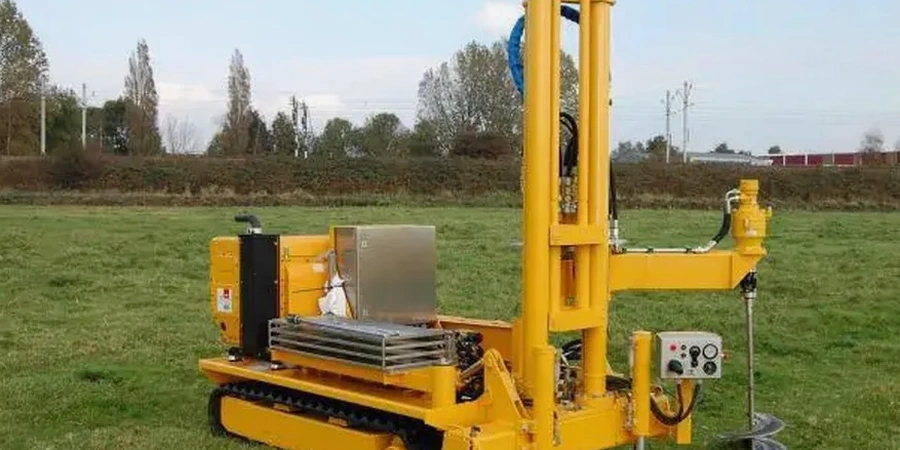
A typical investigation involves a phased approach: desktop review of geological maps and historical records, followed by field exploration using test pits, boreholes, or in-situ methods like CPT. Soil and rock samples are tested in a laboratory for strength, compressibility, and gradation. The process concludes with an engineering report providing foundation recommendations, seismic design parameters, and earthwork specifications tailored to Coquitlam's local soil conditions and the BC Building Code.
The City of Coquitlam generally requires a geotechnical report for any development involving structural foundations, significant grading, retaining walls over 1.2 metres, or construction on slopes steeper than 15%. Projects in designated hazard areas, such as floodplains or steep creek ravines, will also trigger the requirement. The scope must align with EGBC guidelines and address site-specific risks identified during the preliminary review.
Coquitlam's variable soils—from dense glacial till on the uplands to soft, compressible clays and loose sands along the Fraser River lowlands—directly influence foundation choices. Deep foundations like piles are often needed where thick organic deposits or liquefiable soils are present. In till-covered areas, conventional spread footings may suffice, but bearing capacity and settlement must be verified. Seismic considerations are paramount province-wide, requiring careful evaluation of site class.
A geotechnical investigation focuses on the physical and engineering properties of soil and rock to support structural design, covering strength, settlement, and slope stability. An environmental site assessment evaluates soil, groundwater, and vapour for contamination that may pose risks to human health or the environment. While distinct, these investigations are often coordinated in Coquitlam, especially on former industrial or agricultural lands, to streamline the permitting process.