Together, we solve the challenges of tomorrow.
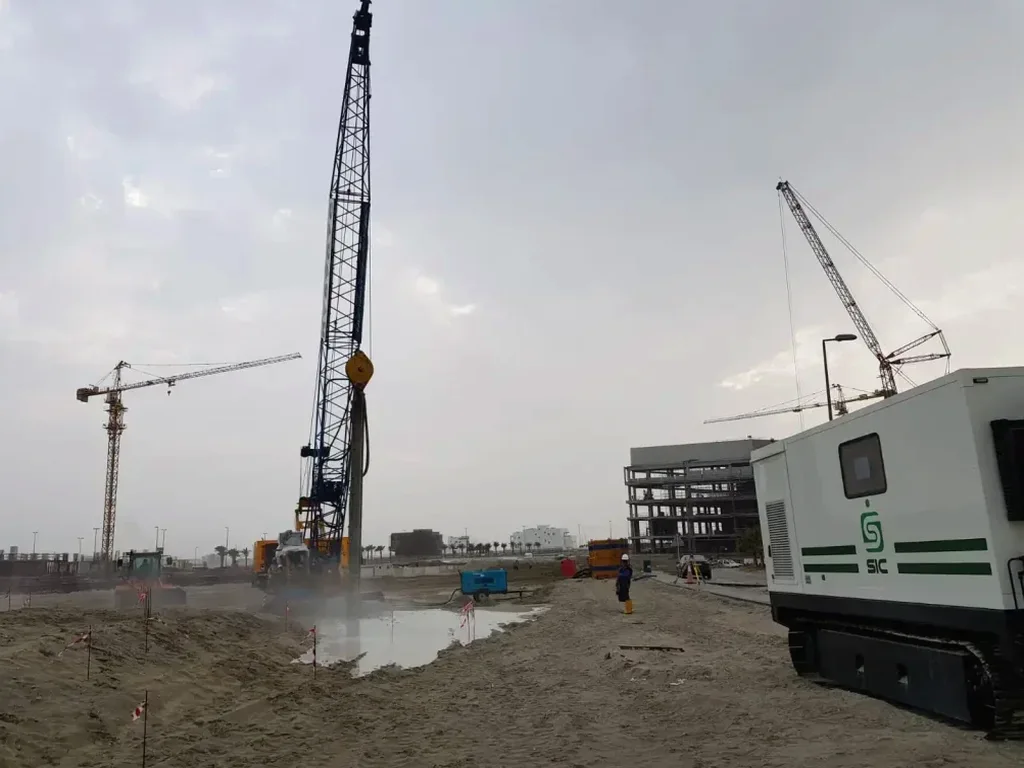
LEARN MORE →Ground improvement in Coquitlam encompasses a suite of geotechnical techniques designed to enhance the engineering properties of soil and rock, ensuring stable, durable foundations for construction projects. This category is critical in a region where variable subsurface conditions—ranging from loose alluvial deposits to compressible silts—can compromise structural integrity if left untreated. By modifying factors such as bearing capacity, settlement potential, and liquefaction resistance, ground improvement mitigates risks associated with poor native soils. In Coquitlam's evolving urban landscape, where residential subdivisions, commercial complexes, and infrastructure upgrades are constant, these methods provide cost-effective alternatives to deep foundations or excavation and replacement. The integration of stone column design and vibrocompaction design exemplifies how targeted solutions address specific soil challenges while adhering to rigorous performance standards.
Coquitlam's geology is shaped by its position within the Lower Mainland, characterized by glacial and post-glacial sediments overlying bedrock. Much of the city sits on the Fraser River floodplain and adjacent uplands, where soils include thick layers of soft clay, silt, and loose granular deposits. These materials are prone to excessive settlement under load and, in seismic events, can experience strength loss or liquefaction—a particular concern given the region's proximity to the Cascadia Subduction Zone. Local conditions also feature areas with high groundwater tables, complicating excavation and requiring ground improvement to stabilize the subsurface before construction begins. Understanding these geotechnical hazards is the first step in selecting an appropriate improvement technique, whether for a single-family lot on a sloping site or a multi-story building near the Coquitlam River.
Canadian practice for ground improvement is governed by national and provincial standards, with the National Building Code of Canada (NBC) and the British Columbia Building Code (BCBC) setting minimum requirements for foundation design and seismic resilience. The Canadian Foundation Engineering Manual (CFEM) provides detailed guidance on site investigation, analysis, and design of improvement methods, referencing ASTM and CSA standards for material testing and quality control. In Coquitlam, geotechnical reports must comply with the Engineers and Geoscientists BC (EGBC) professional practice guidelines, which emphasize performance-based design and verification testing. For liquefaction mitigation, the NBCC 2020 seismic hazard maps dictate design ground motions, and improvement techniques must demonstrate post-treatment resistance through methods like Standard Penetration Testing (SPT) or Cone Penetration Testing (CPT). These regulations ensure that ground improvement projects meet safety thresholds while allowing flexibility for innovative approaches like stone column design or vibrocompaction design.
Projects requiring ground improvement in Coquitlam span a wide spectrum, from transportation corridors to residential developments. Infrastructure initiatives such as road widenings along Lougheed Highway or the Evergreen Extension of the SkyTrain often encounter soft soils that demand stabilization to prevent differential settlement. Commercial and industrial buildings in areas like the Pacific Reach Business Park benefit from ground improvement to support heavy floor loads and crane operations. Even smaller-scale projects, including retaining walls on hillside properties in Westwood Plateau or basement excavations in Burke Mountain, may need soil reinforcement to manage slope stability or groundwater control. In each case, the choice of technique—whether deep vibratory methods, rigid inclusions, or aggregate piers—depends on site-specific factors like depth to competent strata and environmental constraints.
Ground improvement refers to modifying soil properties to increase bearing capacity, reduce settlement, or mitigate liquefaction. In Coquitlam, it is necessary due to widespread soft clays, silts, and loose granular soils that can compromise foundations, especially in seismic events. It enables safe construction on otherwise problematic sites without deep excavation.
A geotechnical investigation, including boreholes and cone penetration tests, is required to assess soil conditions. Indicators like high compressibility, low SPT blow counts, or shallow groundwater suggest the need for improvement. An experienced geotechnical engineer can then evaluate whether densification, reinforcement, or drainage methods are appropriate.
The National Building Code of Canada and the BC Building Code set foundation and seismic design criteria. The Canadian Foundation Engineering Manual provides technical guidelines, while Engineers and Geoscientists BC mandates professional practice standards. Compliance involves performance verification through post-treatment testing like CPT or load tests.
Common methods include vibrocompaction for densifying loose sands, stone columns for reinforcing soft clays, rigid inclusions for settlement control, and deep soil mixing for strength enhancement. The choice depends on soil type, project loads, and seismic requirements, often combining techniques for complex sites.