← Home · Foundations

Shallow Foundation Design in Coquitlam: NBCC-Compliant Bearing Capacity

Together, we solve the challenges of tomorrow.

LEARN MORE →

The National Building Code of Canada sets strict requirements for bearing capacity and settlement, and in Coquitlam the soil conditions make that analysis especially critical. Much of the city sits on Pleistocene glacial till and advance outwash deposits, but the valley floors along the Coquitlam and Fraser Rivers transition into softer alluvial silts with pockets of organic material. Our team has executed dozens of shallow foundation investigations from Westwood Plateau down to Maillardville, and the variation over short distances is striking. Getting the subgrade modulus right depends on understanding how the Vashon Drift behaves under load. For sites with deeper compressible layers we often pair the footings design with a mat foundations assessment when differential settlement becomes the controlling limit state. The geotechnical report we deliver references the specific site class defined under NBCC 2020 and provides factored bearing resistances ready for the structural engineer.

Bearing capacity in Coquitlam's glacial till is rarely the problem; it is the differential settlement across the till-alluvial transition that governs most shallow foundation designs.
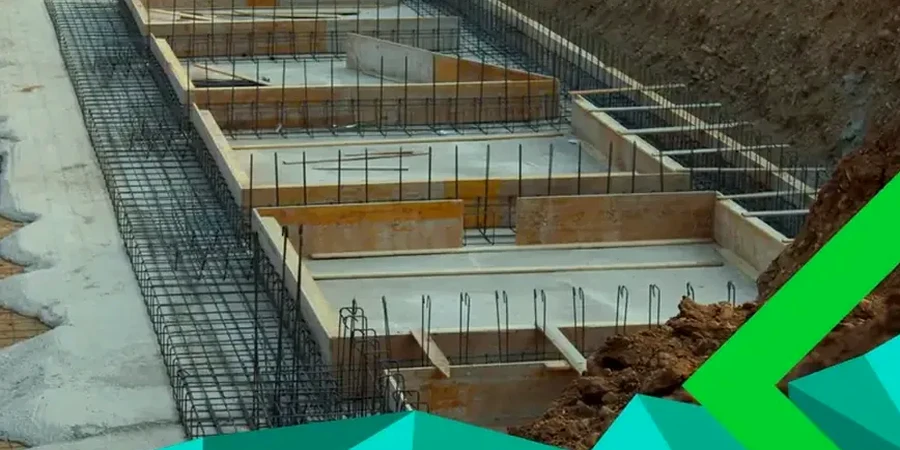
Methodology and scope

Coquitlam's development pattern shifted dramatically with the 1990s expansion onto the slopes of Burke Mountain and Westwood Plateau, exposing site preparation challenges in steep terrain underlain by lodgement till. The downtown core and Austin Heights sit on relatively competent glacial deposits, where shallow foundations generally perform well with bearing pressures in the 150 to 300 kPa range at typical footing depths. However, the lower reaches near Colony Farm and along the Pitt River floodplain tell a different story: thick sequences of post-glacial silts and clays that require careful settlement analysis even for lightly loaded strip footings. In these areas we combine our shallow foundation evaluation with a liquefaction screening triggered by the seismic demands in NBCC Table 4.1.8.18, and when we need accurate stiffness profiles for serviceability checks we run MASW surveys to capture shear wave velocity down to 30 metres. The interaction between footing geometry and soil-structure stiffness drives the final recommendation, and we size footings to keep total settlement under 25 mm for conventional structures.
Shallow Foundation Design in Coquitlam: NBCC-Compliant Bearing Capacity
Technical reference image — Coquitlam

Local considerations

The geotechnical contrast between Westwood Plateau and Maillardville illustrates the biggest risk in Coquitlam shallow foundation design. Up on the Plateau you are dealing with dense till and bedrock at relatively shallow depth, and bearing capacity failures are almost unheard of for properly designed footings. Down in Maillardville, near the Brunette River, the soil profile shifts to soft alluvium and organic silts that can compress several centimetres under load. The real danger is ignoring the transition zones, where a building straddles two different soil units and differential settlement cracks appear within the first five years of service. We have also seen problems where fill of unknown origin was placed decades ago and never properly documented: the footing might bear on competent material while an adjacent utility trench settles into poorly compacted backfill. A targeted test pits program in these older neighbourhoods reveals the fill thickness and composition, letting us design footings that either penetrate through it or sit on engineered fill placed under observation.

Need a geotechnical assessment?

Reply within 24h.

Email: contact@geotechnicalengineering.vip

Technical data

ParameterTypical value
Typical bearing capacity (glacial till, Df=1.2m)200–350 kPa (ULS)
Settlement limit (SIS, conventional structures)25 mm total, 19 mm differential
Seismic site class (Vashon Drift)C (Vs30 360–760 m/s typical)
Minimum footing width (strip)600 mm per NBCC 9.15
Minimum footing depth (exterior, undisturbed soil)1.2 m below grade (frost)
Subgrade reaction modulus (ks) range20–60 MN/m³ (plate load derived)
Factor of safety (bearing, static)3.0 per CFEM 2006

Associated technical services

01

Bearing Capacity and Settlement Analysis

We calculate factored bearing resistance using general shear and local shear failure models calibrated to SPT N-values and lab shear strength data. Settlement is estimated via Schmertmann's method for granular soils and Janbu's tangent modulus approach for clays, with consolidation testing run on Shelby tube samples from the alluvial zones near the Fraser and Pitt Rivers. The output is a set of allowable bearing pressures at serviceability and ultimate limit states, plus subgrade reaction modulus values for structural modelling.

02

Footing Geometry and Reinforcement Recommendations

We specify minimum footing width, embedment depth, and reinforcement detailing aligned with CSA A23.3 and the frost protection requirements in Coquitlam's building bylaw. For eccentrically loaded footings on sloping terrain, we check sliding and overturning stability and recommend keying into the till where passive resistance is needed.

Applicable standards

NBCC 2020 (Division B, Part 4 and Part 9), CSA A23.3:19 (Design of Concrete Structures, footing provisions), CFEM 2006 (Canadian Foundation Engineering Manual), ASTM D1194 / D1195 (Plate Load Test, now withdrawn but still referenced in practice), ASTM D2488 (Visual-Manual Soil Description)

Quick answers

How deep do footings need to be in Coquitlam to meet frost protection and bearing requirements?

The NBCC 2020 requires a minimum of 1.2 m of cover to undisturbed soil for exterior footings, but in Coquitlam we often recommend 1.5 m on north-facing slopes or in silty soils where frost penetration can exceed the code minimum. The footing must also extend at least 150 mm into competent bearing stratum, which in the till zones is usually achieved within that same excavation. Where fill is encountered, the depth increases until you reach native glacial material.

Can we use shallow foundations on the alluvial soils near the Coquitlam River?

It depends on the thickness of the compressible layer and the structural tolerance for settlement. In many cases, a mat foundation or interconnected strip footings can redistribute loads enough to keep differential settlement within tolerable limits, but if the alluvium is more than 3–4 m thick and contains organic silt, we may recommend excavation and replacement with engineered granular fill or a transition to a deep foundation solution. We make that call after reviewing SPT blow counts and consolidation test results from the specific lot.

What does a shallow foundation design package cost for a typical single-family home in the Tri-Cities?

Location and service area

We serve projects across Coquitlam and surrounding areas.

View larger map